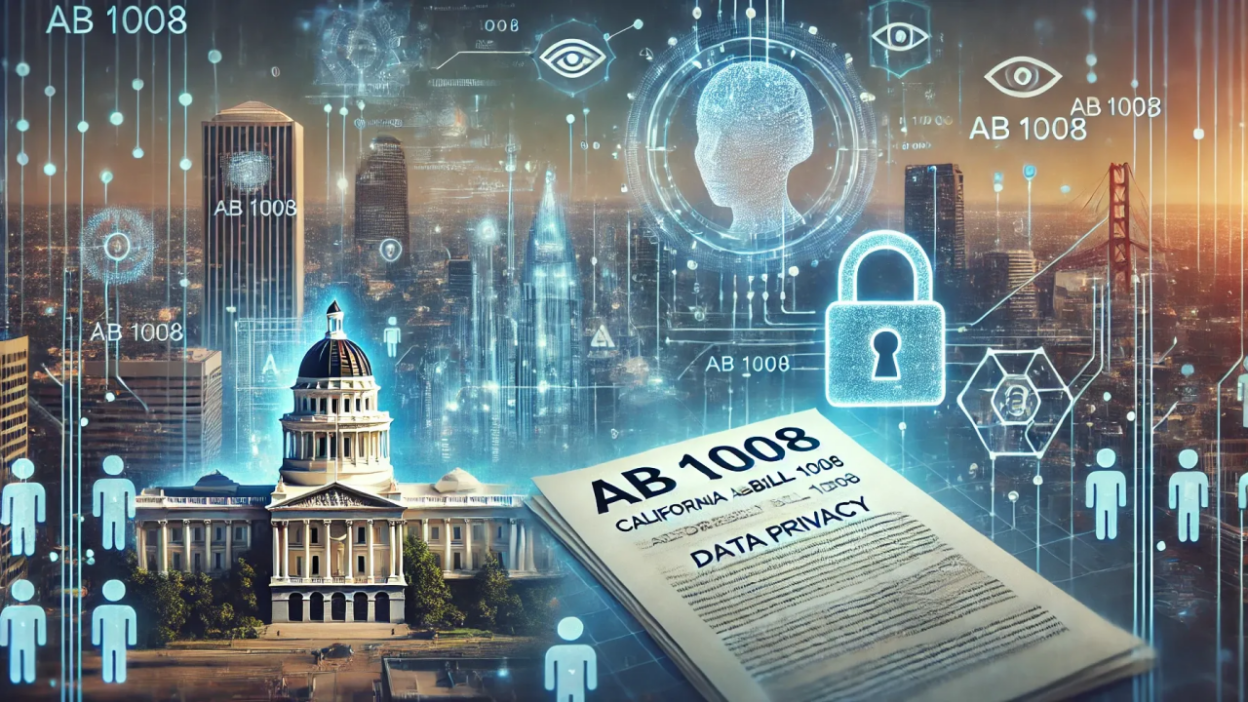
AB 1008 marks the most record-breaking law in data privacy regulations, especially on AI (artificial intelligence) systems. The law was an amendment to the California CCPA Act and expanded the definition of personal information to incorporate data processed by AI systems that are capable of generating personal information. This change of law will have serious effects on the companies that use AI, as they will need to change their data treatment processes to fit in with new privacy expectations.
Narrowing down the Concept of Personal Information. The California government passed the bill as an expansion of the previous bill that stated personal information could be in various forms and that personal information could include “artificial intelligence systems that are capable of outputting personal information.” This development is important for a growing body of literature that acknowledges that AI models, and especially large language models (LLMs), have the capability to understanding and outputting personal data. Thus organizations using such AI models need to understand that the data within the AI models is protected by the CCPA together with other requirements associated with the Act.
Implications for AI Model Management
If we define personal information and include AI systems within it this means that organizations would be tasked with the following responsibilities:
- Data Subject Rights: Consumers have the right to access, delete, modify, or limit the sale or sharing of data pertaining to them (in this case, AI models). Organizations have to put in place mechanisms which would be aimed at dealing with such requests in good faith and this requires thorough infrastructure which would mean workable means of separating and handling information within AI systems.
- Biometric Data Considerations: AB 1008 states that biometric data collected without a knowledge of the consumer cannot be classified as publicly available information and must therefore be protected information as stipulated in the CCPA. This provision touched on above is of particular significance in the case of AI systems employing biometric data, hencecliticms and other leovers would be legally required.
- Neural Data as Sensitive Personal Information: In addition to AB 1008, Senate Bill 1223 (SB 1223) emphasizes the fact that neural data obtained as a result of providing stimulation to the central and/or peripheral nervous systems of the consumer qualifies to be classified as sensitive and personal information. Ai models dealing with this class of data are placed under stricter data protection requirements, which include explicit consent from the consumer and limiting features per use.
Operational Challenges for Organizations
There are a number of operational challenges resulting from complying with AB 1008, including the following:
- Data Inventory and Mapping: Organizations must create an extensive inventory of each of the AI systems, which may contain or create PII, along with creating a mechanism to track them and manage them all.
- AI Model Documentation: To this end, it is prudent to keep a detailed record of AI models, their training sources and what they can be or tend to be used for in the future.
- Consumer Rights Management: Creating guidelines on how to manage consumer requests concerning their rights over the AI processed data through access, deletion, and correction is necessary to secure the privacy of the consumers.
- Data Minimization: It also focuses on re-evaluating the approaches used in collecting data especially personal identification information for AI training in order to comply with data minimization principles.
Technical and Compliance Considerations
The time limit that is set for meeting data subject requests is also a major compliance issue which is further worsened by the complexity of retraining large language models due to their relatively high computational requirements. Organizations should go for a compromise whereby addressing consumer rights will not undermine the performance and quality of AI systems.
Global Regulatory Landscape
“California’s approach is different from the views elsewhere,” states Rosenfeld. In a similar vein, the Hamburg Authority for Data Protection asserts that LLMs ‘cannot be regarded’ as containing personal information and ‘are not subject to such legal rights (of data subjects) as the right to erase or right to rectification.’ The differences noted concern not even the approaches but the already functioning and ever-evolving, dynamic regulation of AI technologies and AI-based services, which creates a reason for organizations to keep an eye on and make even rapid, if needed, changes in the legal regulation they operate under.
Conclusion
AB 1008 should be seen as a breakthrough in incorporating AI systems as part of data privacy laws. Organizations have to nip this in the bud. They should be able to review and modify their data practices in a manner that AI models will no longer violate an extensive understanding of what personal information is. In this way, they achieve legal compliance and safe and transparent deployment of AI technologies.